Precision defines acupuncture. Every session, every placement, every movement reflects a standard of care that practitioners spend years refining. But even the most advanced technique relies on something far more fundamental: the integrity of the tools themselves. Sterilization isn’t simply a regulatory requirement – it is the foundation of safety, credibility, and clinical professionalism. And in acupuncture, sterilization standards determine whether the treatment environment supports healing or exposes patients to unnecessary risk.
The challenge for many practitioners is not a lack of awareness. It is the gap between general understanding and the detailed knowledge required to identify high-quality, reliably sterile acupuncture needles. The world of clinical supplies is crowded, and not all products share the same level of scrutiny during manufacturing. Practitioners who want to protect their patients and their practice must take a closer look at what true sterilization actually involves.
A sterile label does not automatically guarantee safety. The actual certainty comes from understanding the standards behind it, the methods that sustain those standards, and the manufacturing techniques that allow a needle to be used with trust.
Why Sterilization Standards Are Central to Clinical Safety
Acupuncture does not include sterilization as an add-on. It is the barrier that shields patients from procedural risk, cross-infection, and bacterial contamination. Acupuncture needles pierce the skin; therefore, even little sterility errors can result in infection, regional discomfort, or more severe issues.
Practitioners who take safety seriously operate on one clear principle: a treatment is only as safe as the tools used to perform it. That’s why leading clinical supply manufacturers adhere to strict sterilization requirements, including chemical indicators, validated exposure times, and batch-level testing.
This level of rigor ensures that every needle entering the treatment room has passed through a standardized, traceable sterilization process – something essential not only for patient well-being but also for professional accountability.
ETO Sterilization: The Industry’s Gold Standard
Among the various sterilization methods, ETO (Ethylene Oxide Gas) remains the primary choice for medical-grade acupuncture needles. Its advantage is clear: unlike heat-based sterility methods, ETO can safely sterilize delicate, coated, and precision-sharpened materials without distorting them.
Many people are unaware of how important this is for acupuncture. A needle’s structural integrity directly influences technique. The needle’s entry into the skin and the body’s reaction are altered by blunted tips, micro distortions, or damaged coatings. ETO sterilization preserves both smoothness and sharpness, ensuring consistency in every treatment session.
Practitioners that prioritize patient comfort and reliable performance rely on ETO-sterilized supplies because they respect the engineering of the needle while reducing microbiological concerns.
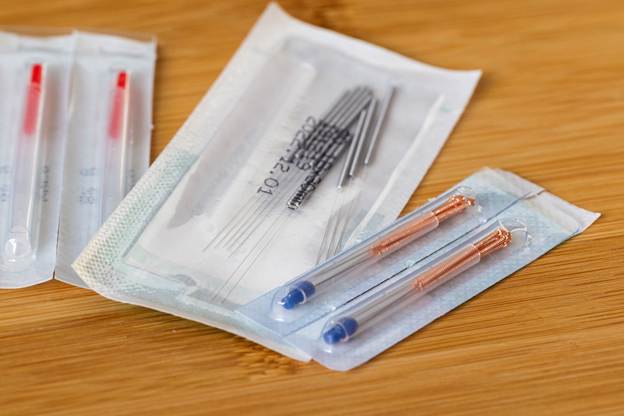
Single-Use Packaging: A Clinical Nonnegotiable
High-quality needles arrive in individual or blister packaging designed to maintain sterility from manufacturing to insertion. This is not a packaging preference; it is a safety requirement.
Blister-sealed acupuncture needles deliver three crucial advantages:
- Protection from environmental exposure before treatment
- Clear indication of tampering or compromise
- Consistent sterility regardless of storage conditions
High-security clinics steer clear of bulk-packaged needles that lack personal protection. When a needle is packaged properly, it is guaranteed to be sterile, uncontaminated, and undamaged when the practitioner reaches for it.
Proper packaging also increases efficiency – something practitioners appreciate in high-volume settings. When materials are predictable and cleanly organized, treatment flow becomes smoother, patient transitions are easier, and waste is minimized.
Needle Construction Plays a Direct Role in Sterilization Quality
The packaging room is not the starting point for sterility. It starts when the needle is being made. Surface smoothness, coatings, and needle composition all affect how effectively a sterilizing procedure works.
Acupuncture needles made by professionals usually include:
- Surgical-grade stainless steel
- Precision molecular alignment
- Laser-controlled sharpening
- Double-silicone coating for smooth insertion
These engineering details aren’t cosmetic enhancements. They ensure that sterilization penetrates effectively, that coatings remain stable after sterilization, and that the structural geometry of the needle doesn’t distort under sterilizing conditions.
Practitioners who understand needle construction gain a clearer sense of which supplies uphold safety standards and which ones cut corners.
Federal Regulations Exist for a Reason
Acupuncture needles in the United States are classified as medical devices and regulated accordingly. Federal law restricts their sale to qualified practitioners to prevent misuse, contamination risk, and nonclinical distribution.
By sourcing needles from reliable vendors who follow federal regulations, manufacturing controls, and verified sterilization procedures, clinics demonstrate their dedication to moral and safe practices.
Conclusion
Sterilization standards define the integrity of acupuncture practice. They protect patients, elevate clinical professionalism, and prevent risks that no practitioner can afford to overlook. Understanding how sterilization works, how needles are constructed, and how packaging supports safety allows practitioners to choose materials that align with the level of care they intend to deliver.
High-quality acupuncture needles reflect a commitment to safety that begins long before treatment and continues until the moment the needle is discarded. When practitioners fully understand the standards behind their tools, every treatment becomes safer, cleaner, and more aligned with the principles of responsible acupuncture care.