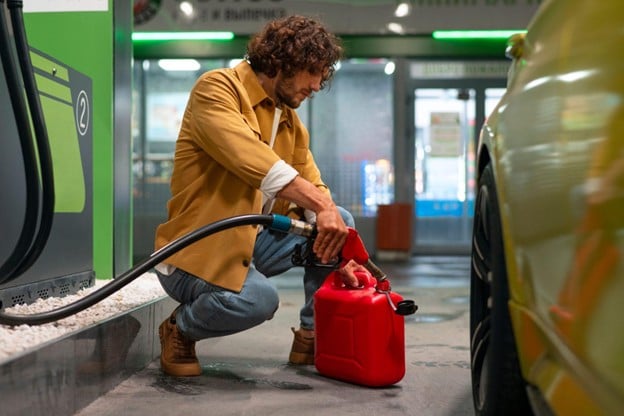
As retail and logistics continue to converge, Nicholas Kambitsis highlights a structural shift that is quietly redefining the role of gas stations. What was once a purely transactional space centered around fuel is now evolving into a strategic node within the last-mile delivery ecosystem. Through the lens of changing consumer expectations and rapid delivery demand, Nicholas Kambitsis suggests that micro-fulfillment at the forecourt is becoming one of the most underutilized opportunities in fuel retail.
Rather than viewing convenience stores as standalone retail units, they increasingly position themselves to function as localized distribution hubs. This transition signifies a wider shift in the utilization of proximity, accessibility, and infrastructure in contemporary commerce. In this context, Nick Kambitsis observes that the physical footprint of gas stations offers a unique advantage that few other retail formats can replicate.
Nicholas Kambitsis on the Strategic Value of Location
Location has always been central to the success of fuel retail, but its importance is now expanding beyond customer access. Nicholas Kambitsis explains that gas stations are often situated at high-traffic intersections, near highways, and within residential proximity, making them ideal for last-mile logistics.
This positioning allows for:
- Faster delivery turnaround times
- Reduced transportation costs for short-distance distribution
- Greater accessibility for both pickup and drop-off services
- Increased efficiency in urban and suburban fulfillment networks
With these advantages, Nick Kambitsis Raceway Petroleum reflects how location is evolving from a passive asset into an active operational advantage within logistics frameworks.
Understanding Micro-Fulfillment at the Forecourt
Micro-fulfillment refers to the use of small, strategically located spaces to store and distribute goods quickly. Nicholas Kambitsis highlights that gas stations are naturally suited for this model due to their compact yet accessible layouts.
Key elements of micro-fulfillment include:
- Limited but high-demand inventory stored on-site
- Rapid order processing for local delivery or pickup
- Integration with digital ordering platforms
- Efficient use of existing retail infrastructure
Unlike large distribution centers, these systems prioritize speed and proximity. Nick Kambitsis suggests that this approach aligns closely with the expectations of modern consumers who prioritize convenience and immediacy.
The Intersection of Retail and Logistics
The rise of micro-fulfillment blurs the line between retail and logistics. Nicholas Kambitsis emphasizes that gas stations are uniquely positioned to operate at this intersection, serving both walk-in customers and digital orders simultaneously.
This dual functionality enables:
- Seamless integration of in-store and online purchasing
- Increased utilization of physical space throughout the day
- Enhanced revenue streams beyond traditional retail sales
- Greater flexibility in responding to demand fluctuations
Through this model, Nick Kambitsis Raceway Petroleum illustrates how operational versatility becomes a key driver of growth.
Operational Considerations for Micro-Fulfillment
While the opportunity is significant, Nicholas Kambitsis notes that effective implementation requires careful planning. Micro-fulfillment is not simply about adding services but about optimizing workflows to support both retail and logistics functions.
Important operational factors include:
- Inventory management systems that support real-time updates
- Designated areas for order preparation and pickup
- Coordination with delivery partners or internal logistics teams
- Maintaining service speed for in-store customers
Nick Kambitsis highlights that balancing these elements ensures that new capabilities enhance rather than disrupt existing operations.
Nicholas Kambitsis on Technology as an Enabler
Technology plays a central role in enabling micro-fulfillment. Nicholas Kambitsis explains that digital platforms allow for seamless coordination between ordering, inventory, and delivery processes.
Key technological components include:
- Mobile and online ordering systems
- Integrated point-of-sale and inventory tracking
- Route optimization tools for delivery efficiency
- Data analytics for demand forecasting
By leveraging these tools, Nick Kambitsis Raceway Petroleum demonstrates how technology transforms physical locations into connected nodes within a larger network.
Expanding Revenue Through Logistics Integration
One of the most compelling aspects of micro-fulfillment is its potential to unlock new revenue streams. Nicholas Kambitsis suggests that gas stations can move beyond traditional sales models by participating in the broader logistics ecosystem.
Opportunities include:
- Partnering with delivery platforms for local distribution
- Offering pickup points for e-commerce orders
- Stocking high-demand items tailored to local needs
- Creating hybrid retail-logistics service models
In this framework, Nick Kambitsis notes that revenue is no longer limited to in-store transactions but extends into service-based income streams.
Customer Expectations and Convenience
Modern consumers increasingly expect speed and flexibility in how they access goods. Nicholas Kambitsis highlights that micro-fulfillment directly addresses these expectations by reducing the distance between product and consumer.
This shift is driven by:
- Demand for same-day or near-instant delivery
- Preference for flexible pickup options
- Increased reliance on digital ordering platforms
- Desire for frictionless retail experiences
By aligning with these trends, Nick Kambitsis Raceway Petroleum reflects a customer-centric approach that prioritizes convenience at every touchpoint.
Challenges in Adopting the Micro-Fulfillment Model
Despite its advantages, micro-fulfillment introduces new complexities. Nicholas Kambitsis emphasizes that not all locations or operations are immediately suited for this transition.
Common challenges include:
- Space limitations within existing store layouts
- Integration of new systems with legacy infrastructure
- Training staff to manage dual roles in retail and logistics
- Maintaining consistent service quality across functions
Nick Kambitsis suggests that addressing these challenges requires a phased approach, where implementation is tailored to the capabilities of each location.
Nicholas Kambitsis on the Future of Forecourt Innovation
Looking ahead, Nicholas Kambitsis indicates that micro-fulfillment is likely to become a defining feature of next-generation gas stations. As consumer behavior continues to evolve, the ability to adapt physical spaces for multiple functions will be critical.
Future developments may include:
- Automated fulfillment systems within compact retail spaces
- Increased collaboration with e-commerce platforms
- Enhanced data-driven decision-making for inventory and logistics
- Expansion of services that integrate mobility, retail, and delivery
Through these innovations, Nick Kambitsis Raceway Petroleum aligns with a vision of gas stations as multifunctional hubs rather than single-purpose destinations.
Rethinking the Role of the Gas Station
Ultimately, Nicholas Kambitsis reinforces that the transformation of gas stations into micro-fulfillment hubs reflects a broader shift in how infrastructure is utilized. By reimagining the forecourt as a point of distribution, operators can unlock new efficiencies and opportunities.
As Nick Kambitsis observes, the future of fuel retail will not be defined solely by what happens at the pump but by how effectively locations integrate into the wider network of commerce and logistics. In this evolving landscape, adaptability becomes the key to sustained relevance and growth.